Author’s Biography
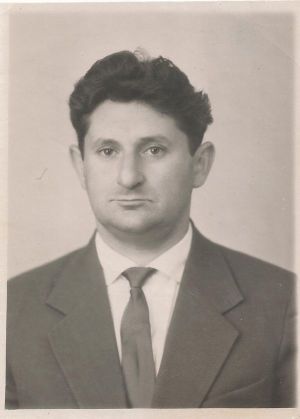
I was born on August 24, 1929, in the city of Vitebsk, Belorussian SSR, into a white-collar family. In 1931 we moved to Moscow. We lived outside the city, 30 km from Moscow. My father worked in a construction directorate as a procurement agent for office supplies (pencils, pens with nibs, writing paper, and the like). My mother worked as a metal inspector at the Stalin Automobile Plant (ZIS). In February 1942 I was left on my own — my father was at the front as a soldier, and my mother was in the hospital with a heart attack. Having received a children’s food ration card from the local district council, I went to the store to get in line for bread. On the way, a stranger took my ration card from me. (Ration cards were not reissued.) I went hungry. But I got lucky. In early February 1942, despite being only 12 years old, I was conditionally admitted to the vocational school (RU) at the Stalin Automobile Plant. (Normally, admission to the RU began only at age 14.) During the war, RU students worked full shifts in the plant’s shops six days a week. I worked in Tool Shop No. 3, in a crew of tool-and-die fitters who made die molds for pressure casting of parts from silumin alloy and plastic. They built me a tall platform with a step so I could reach the vise on the workbench. At first I was a fitter’s apprentice, and later became a fitter of the 5th grade. By the end of my second year on the job, I could read technical drawings. I was awarded the medal “For Valiant Labor in the Great Patriotic War of 1941–1945.”
I served as a soldier in the Soviet Army for three years, six months, and four days. My officer’s rank was conferred much later. After demobilization, I went back to work in Tool Shop No. 3 as a fitter and on general-purpose milling and slotting machines, doing work from technical drawings.
Starting in the 5th grade, I studied in the evenings after work for 16 years. I completed School for Working Youth No. 66 in Moscow, then the evening division of the Moscow Mechanical Engineering Institute, majoring in “Mechanical Engineering Technology, Metal-Cutting Machine Tools and Tooling,” and then graduate studies at the Moscow Institute of Electronic Machine Building (MIEM). I defended my dissertation on the topic “Development and Study of a Rolling-Element Gear Mesh for Drives Operating in Vacuum.” An Author’s Certificate was issued for the design. (In the electro-vacuum industry, production lines use mechanisms with gears that operate in a high vacuum.) I taught the course “Machine Elements” in MIEM’s evening division for two years. I co-authored a textbook on machine elements for universities. I published in scientific and technical journals and collections, and took part in international scientific conferences.
In 1960 I was transferred to the Design and Experimental Engineering Department of ZIL (UKER ZIL) as a design engineer. I worked on designing equipment for testing automotive parts and assemblies. I later became a 1st-category design engineer, then lead design engineer, group leader, and head of a design bureau. I was not a Party member, but I was actively involved in public life. For 11 years, alongside my main job, I was elected chairman of the UKER Council of Inventors and Rationalizers. I was awarded a “Certificate of Honor from the Ministry of the Automotive Industry, with a cash gift.” For developing a highly effective design, I received a commendation from the Minister of the Automotive Industry of the USSR and was awarded a cash bonus. (Order of the Minister of the Automotive Industry of the USSR No. 441 of August 29, 1983.)
In 1994, an international automotive equipment exhibition was held in Moscow. Among ZIL’s exhibits, alongside other designs, was one of mine, which drew the interest of representatives from a major American automotive company. I was invited to the United States for an interview. After the interview, I was offered a contract to work as a design engineer (Project Engineer), reporting to the chief engineer. Having retired, I moved to the United States with my family (my wife and our minor son) in 1995, on a work visa. The projects I worked on there were substantially different from what I had designed at ZIL. After three years on the job, a competitive selection process was announced for my position, as required by regulation (an American engineer takes precedence over a foreign one). I was the one kept on as a result of that process. After ten years with the company, I retired at the age of 75. Candidate of Engineering Sciences (1967); Doctor of Engineering Sciences–PhD in Mechanical Engineering (1997).
My teachers
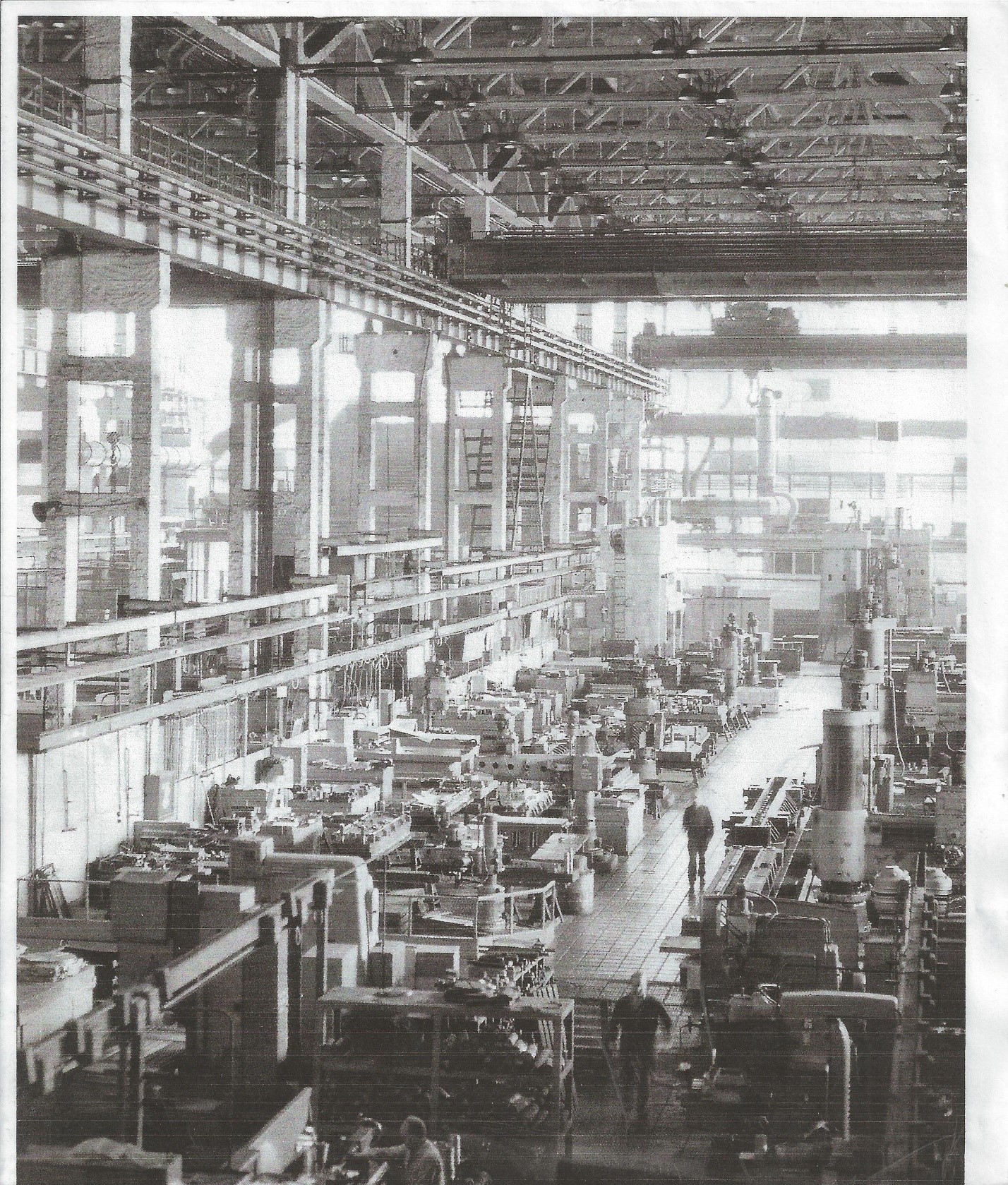
I remember with gratitude my mentors, highly qualified toolmakers who made complex molds for die casting from silmin and plastic alloys according to drawings, and especially the foreman Rafail Mikhailovich Shchepotin, who treated me like a father and at the same time was demanding of me, a student of the vocational school at ZIS, who joined his team in early February 1942 at the age of 12. years. During the war, students of the vocational school worked in the plant shops 6 days a week full time with adults, as a rule. For me, an additional vice was installed on the mechanic’s workbench and a wooden stand with a step was made. The day was completely fulfilled. For the first time, not only my hands hurt, but also the muscles of my arms and legs. Calluses appeared on my hands. I remember a useful life lesson. In the morning, when I came to work, to my question about what I should do, Rafail Mikhailovich said: “Finish yesterday’s work - remove the sawdust from your work place and put the measuring tool in your workbench drawer correctly, as you learned.” I remember the gift to the team on my birthday. At the beginning of the working day, R. M. Shchepotin gave me a factory pass and said that he had agreed with the HR department that I could go for a walk, that this day would be counted as a bonus and I would not lose my salary, and he also gave me 900-page “Handbooks of the Machine Builder”, in which there are 105 pages about “Bolt Joints” alone. I went outside, walked around, there was nothing to do and after lunch I returned to the shop. When I entered the 5th grade of the Industrial Revolution School up to the 10th grade, Rafail Mikhailovich from the team sometimes let me go to work two hours earlier to prepare for tests, although the team often stayed after the end of the shift. By the end of the second year of work, I could read drawings and acquired basic skills in metalworking.
By the Decree of the PRESIDIUM of the SUPREME SOVIET of the USSR of June 6, 1945, the team members, including me, were awarded the medal “FOR VALOROUS LABOR IN THE GREAT PATRIOTIC WAR 1941-1945”. (The medal is not a jubilee).
I cannot help but say about my scientific supervisor in graduate school at the Moscow Institute of Mechanical Engineering (MIEM), Honored Scientist and Engineer of the RSFSR, Doctor of Engineering Sciences, Professor Nikolai Aleksandrovich Spitsyn. He treated the students better. A student could get a failing grade on an exam if he knew nothing at all. He had other requirements for postgraduate students. When I approached Nikolai Aleksandrovich with a question about whether I could enroll in his evening postgraduate program and told him the topic that I should pay attention to: “Development of calculation and study of planetary gear transmission with body swings”, he said: “If you only want to work on your dissertation, then this is not for me. First of all, you will have to pass the postgraduate minimum exams, which require deep knowledge of machine parts, theoretical mechanics, concepts and machines, against the material. And higher mathematics, knowledge of which is necessary for serious engineering calculations, must be taught.” At the same time, the statement is known to be repeated: “It is better to devote a couple of years to studying mathematics than a whole life built on it.” Perhaps such requirements for postgraduate students were restored by N. A. Spitsyn while lecturing at the Dresden Higher Technical School, one of the oldest universities in Germany. The first two years the word dissertation was not pronounced at all. In accordance with the curriculum, I based two main subjects and took exams every semester, in which N. A. and usually the head of the department of the subject being taken (the exam on strength of materials, you have to retake it). I also entered the evening department of the Mechanics and Mathematics Department of Moscow State University named after M. V. Lomonosov, but due to the workload at ZIL, I could not “pull”. I attended lectures and did homework on mathematics at MIEM. I remember, when I was a postgraduate student, in an article on risk studies carried out according to the plan of the participants in the work of MIEM and VNIPP, edited by Nikolai Aleksandrovich, his name as a co-author was formulated first. He corrected: “Eng. S. I. Gorfinkel, Dr. Tech. sciences N. A. Spitsyn”. When I asked why, he replied: “You did the main work. And remember, there is such a thing as decency.” When working on his dissertation, N. A. Observe accuracy and full indication of all sources used and categorically did not tolerate lies. Only after two years of study and passing postgraduate exams and, of course, the exam on “Marxism-Leninism”, I was given assistance in manufacturing experimental gearboxes with rolling elements and conducting tests. Without my participation, positive feedback was received on the organization of the developed method for calculating planetary gear engagement with rolling elements, as well as a positive feedback on the testing of a planetary gearbox with rolling elements in vacuum conditions. Author’s certificate No. 191976 (1965).
